

How we picked
We selected products sold by major retailers and checked list price, materials, stated phone compatibility, adjustability, folded size, and whether the design leaves room for a charging cable. We also noted base grip, weight, and whether pads or hooks help keep a phone steady on a desk.
Tip: Choose a heavier base for frequent tapping, and check that the charging port stays clear if you keep your phone plugged in at your desk.
If your phone holder on desk wobbles every time you tap the screen, you feel it immediately—missed Face ID unlocks, shaky video calls, and that annoying slide toward the keyboard tray. On most desks, the problem isn’t your phone. It’s the stand’s base weight, hinge tension, and charging cutout design.
That’s why the 7 Best Desk Phone Holders in 2026 matter more than they sound. A good stand keeps your phone at eye level, clears space around your keyboard, and survives hundreds of angle adjustments without loosening after two weeks.
Below, I’ll help you make sense of the shortlist already on this page: which type works best for video calls, which one folds flat for hybrid work, which designs are better for larger phones, and which review patterns separate a genuinely useful cell phone holder on desk from one that looks good for three days and then ends up in a drawer.
Why the 7 Best Desk Phone Holders in 2026 look similar—but perform very differently
At a glance, most desk stands seem nearly identical: aluminum arm, silicone pads, adjustable angle, maybe a charging slot. In practice, small design choices change everything.
A stand with a 3 mm-thick metal plate and a wide base usually feels dramatically steadier than a lighter foldable model. Meanwhile, a dual-hinge design can raise your screen closer to eye level, but it also adds a potential weak point if the hinge tension isn’t strong enough to support heavier phones.
That’s the real story behind the 7 Best Desk Phone Holders in 2026. The best option for you depends less on “style” and more on desk setup, phone size, charging habits, and how often you touch the screen while it’s docked.
Which phone holder on desk setup is best for your workspace?
Your ideal phone holder on desk depends on what your phone is doing during the workday. If it’s mostly a notification screen, almost any stable stand works. If it’s a webcam replacement, timer, second display, or music controller, the wrong stand becomes irritating fast.
Here’s how the main setups break down:
- Fixed-angle mini stand
- Best for: small desks, travel, simple charging
- Strength: compact footprint, easy to move
- Weakness: limited height adjustment
- Good match from the list: compact portable models like the mini fold-flat options
- Height-and-angle adjustable stand
- Best for: video calls, eye-level viewing, long desk sessions
- Strength: better ergonomics, easier to align beside a monitor
- Weakness: more hinges can mean more bounce during tapping
- Good match from the list: articulated aluminum models such as Nulaxy, Lamicall, and LISEN-style designs
- Low-profile cradle stand
- Best for: passive viewing, charging, desk clock use
- Strength: usually more stable than tall designs
- Weakness: forces you to look down more often
- Good match from the list: simpler single-body stands like OMOTON-style layouts
- clip on desk phone holder
- Best for: edge-mounted desks, overhead viewing, limited surface space
- Strength: frees up desktop area completely
- Weakness: clamp marks, arm sag, and cable routing issues are more common
- Worth considering if you hate base clutter, but not always the best everyday desk solution
If you’re pairing your stand with a neater workstation, a guide to best desk organizers for office can help you avoid the common mistake of placing your phone stand too close to your mouse path.
What actually separates the 7 Best Desk Phone Holders in 2026 from cheap wobble-prone stands?
Three hardware details make a huge difference, and you can spot them in seconds.
1. Base weight matters more than looks
A desk phone stand with a wider, heavier base usually handles screen taps better. In real-world use, that matters if you check messages 30+ times a day or use your phone for two-factor authentication during work.
If you own a larger phone or keep a thick case on it, look for:
- A broad footprint
- Metal construction rather than thin plastic
- Anti-slip pads on both base and cradle
- Hinge stiffness that doesn’t droop under one-handed tapping
2. Charging cutouts need to be centered and wide
A surprising number of stands advertise cable access but make charging awkward with bulky connectors. The better stands on this page leave enough room for common charging cables and don’t force the phone into a tilted, unstable position while plugged in.
This is especially useful if your stand doubles as a bedside or kitchen stand. For another home-setup angle, Devhubby shows how countertop organization choices often affect where compact tech stands actually get used.
3. Hinge tension determines long-term value
The first week is easy. Almost every adjustable stand feels solid out of the box.
The real test comes after 100 to 200 adjustments, which is where weaker hinges start sagging. The strongest picks in the 7 Best Desk Phone Holders in 2026 are the ones that still hold angle cleanly after daily repositioning between portrait charging and landscape calls.
Best use cases for each style in the 7 Best Desk Phone Holders in 2026
Since the ranked list is already above, here’s the practical breakdown that most shoppers actually need.
Best for all-day office use: full aluminum adjustable stands
Models like the Nulaxy Full Aluminum Dual Folding stand and the Lamicall adjustable stand typically make the most sense for office desks. Their main advantage is screen height flexibility, which helps if your phone sits beside a laptop or under a monitor.
They’re a smart pick if you:
- Join video calls from your phone
- Use a focus timer or calendar app all day
- Need portrait and landscape switching
- Want a stand that feels substantial, not toy-like
Best for clean, simple charging: cradle-style aluminum stands
Options like the OMOTON C2-style layout usually trade height for stability. If your phone mostly sits docked for notifications, music, or charging, this style often feels less fussy and more dependable.
This is the best match if you want:
- Fewer moving parts
- Better tap stability
- Easier one-hand docking
- A lower visual profile on the desk
Best for portability: fold-flat compact stands
Portable desk stands win on convenience, not always on stability. They’re ideal for coworking spaces, library desks, and anyone who throws tech accessories into a backpack daily.
These work best if you:
- Move between home and office 3-5 days a week
- Need a stand that fits a pouch or laptop sleeve
- Don’t constantly jab at the screen while it’s standing
Best for personality and décor: novelty or 3D-printed stands
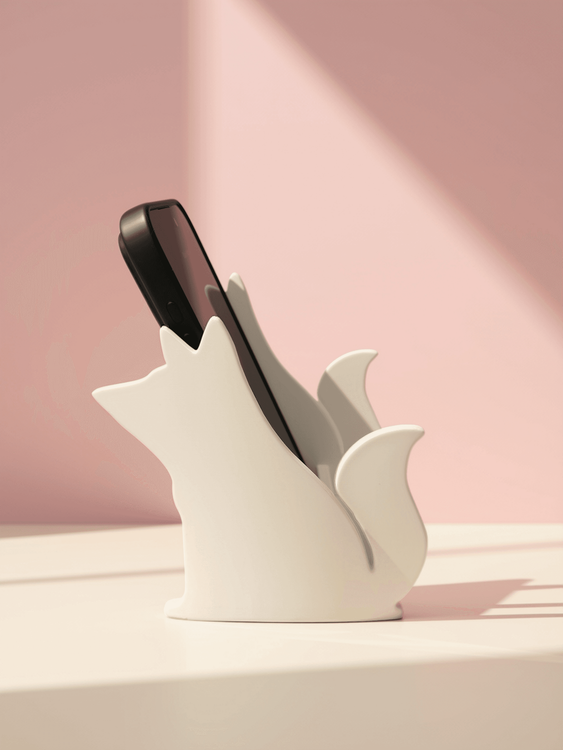
The Fox Phone Holder stands out because it adds visual character to a desk instead of blending into it. That said, decorative stands are usually best for lighter use, especially if they don’t offer much height or angle adjustment.
If aesthetics matter as much as utility, this category can be worth it—but you should still check for:
- Rubberized contact points
- Wide enough support for thicker cases
- Stable footing on smooth laminate desks
What to look for before you buy a cell phone holder on desk
If you only check one section before buying, make it this one. These are the features that most directly affect whether a stand gets used daily or abandoned.
1. A stable base-to-phone ratio
For larger phones, a stand should feel heavier than it looks. If the base is tiny and the support arm is tall, expect wobble during taps.
Best benchmark: choose designs with a visibly wide base or reinforced rear support if your phone weighs more than a compact model.
2. Real adjustability, not just tilt
Some stands “adjust” only a few degrees. Others let you change both height and viewing angle, which is what actually helps neck comfort during longer sessions.
This matters most if your phone sits next to a monitor for workday use.
3. Case compatibility
A stand can test well with a bare phone and fail instantly with a thicker protective case. Deep cradle hooks and broader support lips tend to work better if you use a rugged case, wallet case, or camera-heavy device.
4. Non-slip padding in the right places
Silicone padding should appear on:
- The phone contact points
- The underside of the base
- Any ledge where the device rests
Without that, even a metal stand can skid on smooth desks or scratch a case over time.
5. A charging-friendly cutout
If you plan to charge while using the stand, the cable opening must be wide and centered. A poor cutout forces the phone upward and reduces contact stability.
6. Foldability if you travel
A foldable stand makes sense if it moves between desks. If it never leaves your office, a non-folding or lower-joint design often lasts longer.
What reviews keep revealing about desk phone stands in 2026
Across desk accessories, the same review patterns show up again and again. Stands with lots of praise usually get complimented for stability, one-hand use, and clean cable routing. The ones that disappoint tend to fail in predictable ways.
Watch for these red flags in buyer feedback:
- “Shakes when I tap the screen”
- Usually caused by a narrow base or loose hinge
- More common in ultra-light foldable stands
- “Slides on my desk”
- Often means weak or missing anti-slip pads
- Especially common on glass, veneer, and polished wood surfaces
- “Doesn’t fit with my case”
- A warning sign for shallow hooks or cramped cradle openings
- Extra relevant if you use a thicker protective case
- “Angle won’t stay in place”
- Suggests hinge fatigue
- This tends to show up after a few weeks, not day one
- “Charging cable barely fits”
- Means the stand was designed around a slim connector only
- Frustrating if you swap between cables or use a thicker braided cord
That’s also why the 7 Best Desk Phone Holders in 2026 aren’t just about appearance. Review durability patterns often matter more than first impressions.
Is a clip on desk phone holder better than a regular stand?
Sometimes, yes—but only for a narrow type of setup.
A clip on desk phone holder is excellent if your desk surface is crowded, your monitor arm already dominates the center area, or you want your phone suspended closer to eye level without taking up any footprint. The trade-off is that clamp models are more likely to sag over time, especially if the arm is long and the phone is heavy.
For most people, a weighted desk stand is still the safer everyday buy. If you also want a vehicle option for navigation, a magnetic cell phone holder for car solves a totally different problem and shouldn’t be judged by the same stability standards as a desktop stand.
How the 7 Best Desk Phone Holders in 2026 break down by budget
You don’t need exact prices to shop this category well. The real differences show up by construction quality and hinge complexity.
Under the entry-level range: basic portable stands
This tier is usually best for:
- Travel
- Light desk use
- Backup stands for a second workspace
Expect:
- Smaller bases
- Simpler hinges
- More plastic parts
- Better portability than tap stability
The mid-range sweet spot: most people should shop here
This is where the best value usually sits for a cell phone holder on desk. You typically get aluminum construction, reliable anti-slip padding, and enough adjustability for daily work without overpaying for niche extras.
This tier is ideal if you want:
- Daily charging access
- Good portrait/landscape switching
- Long-term hinge reliability
- A stand that doesn’t look cheap on a professional desk
Premium range: worth it only if ergonomics matter daily
Higher-end desk phone holders usually justify themselves through:
- Better hinge resistance
- Heavier base construction
- More refined finish quality
- Smoother height changes
If your phone is part of your work setup for 4+ hours a day, premium can be worth it. If you just park your phone while answering emails, the mid-range is usually enough.
How to set up a phone holder on desk for better ergonomics
A stand helps most when it’s placed correctly. Too many people buy a good stand and then put it in the worst possible spot.
For the best setup:
- Place the stand just off your monitor’s dominant side, about 6 to 12 inches away.
- Keep the screen high enough that you move your eyes more than your neck.
- Use landscape mode for video calls and portrait mode for messaging or timers.
- Route the charging cable behind the stand so it doesn’t push the base forward.
- Leave at least 3 inches of clearance from your keyboard edge to avoid hand collisions.
Pro tip: If your stand feels unstable, try moving it from a desk mat to the bare desk surface. Soft mats can amplify wobble because the base compresses unevenly under tap pressure.
Are desk phone holders worth it if you already use wireless charging?
Usually, yes. Wireless charging pads solve power delivery, but they rarely solve viewing angle, notification visibility, or camera framing.
A stand is still the better tool if you:
- Take frequent calls from your desk
- Need easy face unlock access
- Follow recipes, scripts, or timers
- Use your phone as a secondary productivity screen
If your broader accessory setup includes audio for calls or focus work, Emediaworld has a useful companion guide for pairing a desk stand with better daily listening gear.
You can also read more here if you’re building a more presentation-ready desk setup that includes mobile-friendly accessories.
The single most important buying tip for the 7 Best Desk Phone Holders in 2026
If you’re choosing between two similar-looking options, buy the one with the heavier base and stronger hinge design, not the one that folds the smallest. On a desk, stability beats cleverness almost every time.
That rule alone will steer most people toward a better result. If you use a large phone, keep a case on it, or tap the screen often, prioritize base stability first, adjustability second, portability third.
For readers comparing accessory performance trends more broadly, tools like semalt.ai can surface visibility signals, while accessory roundups like the case-lanyard examples listed here show how carrying style can affect which desk stand shape feels easiest to dock.
Frequently Asked Questions
what is the best phone holder on desk for video calls?
The best phone holder on desk for video calls is usually a height-and-angle adjustable aluminum stand with a heavy base and firm hinge. That design places the camera closer to eye level and reduces shaking when you tap to mute, switch apps, or reframe the shot.
how to choose a cell phone holder on desk that won’t wobble?
Start with base width, overall weight, and hinge tension. A stand with a broad metal base, anti-slip feet, and strong joint resistance will usually outperform a lighter fold-flat model, especially with larger phones.
is a clip on desk phone holder worth it for small desks?
Yes, a clip on desk phone holder can be worth it if surface space is your biggest problem. Just know that clamp-arm models are more likely to sag over time than weighted desktop stands, so they’re best for light-touch use rather than constant tapping.
do desk phone holders work with thick phone cases?
Many do, but shallow cradle lips are still a common failure point. If you use a thicker case, choose a stand with wider support hooks, open side clearance, and enough depth to hold the phone securely without forcing the angle.
are the 7 Best Desk Phone Holders in 2026 worth upgrading to from a cheap stand?
Yes—if your current stand slides, shakes, or can’t hold angle consistently, the upgrade is noticeable immediately. The best models improve ergonomics, make charging easier, and hold up better under daily use, which matters more than cosmetic differences.


